

Hey there! As a supplier of H12MDA, I'm super excited to chat with you about how this amazing chemical can really boost the strength of adhesives. So, let's dive right in!
First off, what the heck is H12MDA? Well, it's also known as 4,4′-Methylendicyclohexanamine, 4,4-diaminodicyclohexylmethane, or 4,4-Methylenebiscyclohexylamine. It's a cycloaliphatic diamine that has some pretty cool properties that make it a game-changer in the adhesive world.

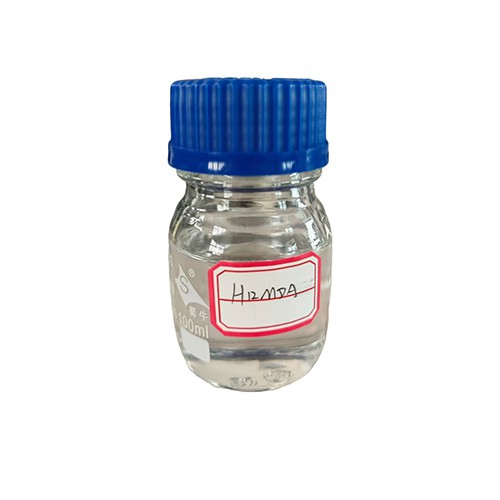
One of the key ways H12MDA enhances adhesive strength is through its chemical structure. The cycloaliphatic rings in H12MDA provide a rigid backbone. This rigidity helps the adhesive to maintain its shape and resist deformation under stress. When you're using an adhesive in a high - stress environment, like in construction or automotive applications, this is crucial. For example, in a car engine, where there are constant vibrations and temperature changes, an adhesive with H12MDA can hold components together much better than one without it.
Another great thing about H12MDA is its ability to form strong cross - links. In an adhesive, cross - linking is like building a network of bridges between different parts of the adhesive and the surfaces it's bonding. H12MDA has reactive amine groups that can react with other components in the adhesive formulation, such as epoxy resins. When these reactions occur, they create a three - dimensional network that significantly increases the adhesive's strength. This network is so strong that it can prevent the adhesive from peeling or shearing off, even when exposed to tough conditions.
Let's talk about adhesion to different surfaces. H12MDA - based adhesives have excellent adhesion to a wide variety of materials, including metals, plastics, and composites. The amine groups in H12MDA can interact with the surface molecules of these materials through various chemical and physical forces. For metals, it can form coordination bonds with metal atoms on the surface. With plastics, it can have van der Waals forces and hydrogen bonding interactions. This broad - spectrum adhesion means that you can use H12MDA - enhanced adhesives in many different industries and applications.
In addition to strength, H12MDA also improves the durability of adhesives. It has good resistance to environmental factors like moisture, heat, and chemicals. Moisture can be a real problem for adhesives because it can weaken the bonds over time. But H12MDA - containing adhesives are more resistant to water absorption. This means that they can maintain their strength even in humid or wet conditions. Similarly, in high - temperature environments, H12MDA helps the adhesive to keep its integrity. And when it comes to chemicals, whether it's exposure to solvents or acids, H12MDA - based adhesives can stand up better than many others.
Now, let's get a bit more technical about the formulation. When you're formulating an adhesive with H12MDA, the ratio of H12MDA to other components matters a lot. You need to find the sweet spot to get the maximum strength. Usually, a proper balance between H12MDA and the resin (like epoxy) will result in an adhesive with optimal cross - linking density. If you use too much H12MDA, the adhesive might become too brittle. On the other hand, if you use too little, the cross - linking won't be sufficient, and the strength will be lacking. So, it's all about finding that perfect ratio through some trial and error.
The curing process is also important. H12MDA can be used in different curing systems, such as room - temperature curing or heat - accelerated curing. Room - temperature curing is convenient for many applications where you don't have access to heating equipment. But heat - accelerated curing can sometimes result in a stronger and more uniform adhesive bond. The heat helps the reaction between H12MDA and the resin to proceed more quickly and completely, leading to a more robust cross - linked structure.
I've seen firsthand how H12MDA can transform an ordinary adhesive into a high - performance one. In the construction industry, for example, we've had customers who were struggling with adhesives that couldn't hold up under the heavy loads of building materials. After switching to an H12MDA - enhanced adhesive, they were amazed at the difference. The joints were stronger, and the overall structure was more stable.
In the electronics industry, where miniaturization is a big trend, adhesives need to be strong but also reliable in small spaces. H12MDA - based adhesives are a great fit here. They can bond tiny components together without taking up too much space, and their high strength ensures that the components stay in place even with the constant movement and electrical currents.
If you're in the market for an adhesive that can offer superior strength, I highly recommend considering H12MDA. It's a versatile and powerful ingredient that can take your adhesive formulations to the next level. Whether you're a manufacturer looking to improve your product line or an end - user in need of a reliable adhesive solution, H12MDA has got you covered.
So, if you're interested in learning more about how H12MDA can enhance your adhesives or if you want to start a procurement discussion, don't hesitate to reach out. We're here to help you find the best solutions for your specific needs.
References
- [List relevant scientific papers or industry reports here]