

Hey there! As a supplier of H12MDA, I often get asked by customers about how they can improve the performance of H12MDA in their products. Well, you've come to the right place! In this blog post, I'm gonna share some tips and tricks that can help you get the most out of this amazing chemical.

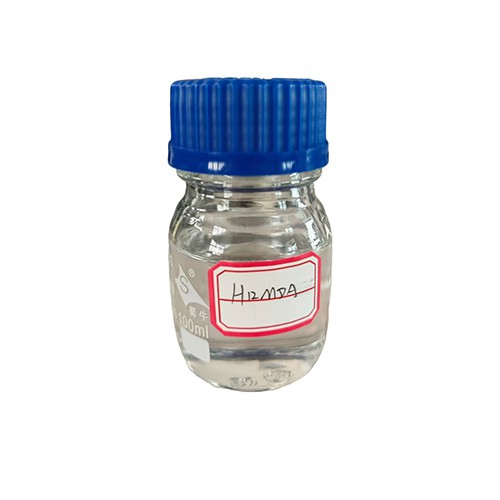
First things first, let's talk a bit about what H12MDA is. H12MDA, also known as 4,4-diaminodicyclohexylmethane or 4,4-Methylenebiscyclohexylamine, is a versatile compound with a wide range of applications. It's commonly used in the production of polyurethanes, epoxy resins, and other high-performance materials. Its unique chemical structure gives it excellent mechanical properties, chemical resistance, and thermal stability, making it a popular choice in many industries.
1. Understand Your Product Requirements
The first step in improving the performance of H12MDA in your product is to have a clear understanding of your product requirements. Different applications have different needs, and you need to make sure that H12MDA is the right fit for your specific use case. For example, if you're using H12MDA in a polyurethane coating, you might be looking for good adhesion, flexibility, and abrasion resistance. On the other hand, if it's for an epoxy resin used in electrical insulation, you'll need high dielectric strength and low moisture absorption.
Once you know what you need, you can work with us to select the right grade of H12MDA. We offer different grades with varying purity levels and physical properties to meet the diverse needs of our customers. By choosing the most suitable grade, you can optimize the performance of your product right from the start.
2. Optimize the Formulation
The formulation of your product plays a crucial role in determining the performance of H12MDA. You need to carefully balance the amount of H12MDA with other components in the formulation. For instance, in a polyurethane system, the ratio of H12MDA to the polyol and the isocyanate can significantly affect the final properties of the product.
Too much H12MDA can lead to a brittle material, while too little might result in poor mechanical strength. You can conduct some trial-and-error experiments to find the optimal ratio. It's also a good idea to consult with our technical experts. We have a wealth of experience in formulating products with H12MDA and can provide you with valuable insights and recommendations.
In addition to the ratio, the order of addition of the components can also matter. Some formulations require H12MDA to be added at a specific stage of the mixing process to ensure proper dispersion and reaction. Make sure to follow the recommended procedures to get the best results.
3. Control the Reaction Conditions
The reaction conditions during the production process can have a big impact on the performance of H12MDA in your product. Temperature, pressure, and reaction time are some of the key factors that you need to control.
For example, in the synthesis of epoxy resins using H12MDA, the reaction temperature can affect the curing rate and the final properties of the resin. If the temperature is too low, the reaction might be incomplete, leading to a less cross-linked and weaker material. On the other hand, if the temperature is too high, it can cause side reactions and degrade the quality of the product.
You should also pay attention to the reaction time. Allowing the reaction to proceed for the right amount of time ensures that the H12MDA fully reacts with the other components and forms a stable and high-performance product. Monitoring and controlling these reaction conditions can help you achieve consistent and reliable results.
4. Improve the Mixing Process
Proper mixing is essential for ensuring that H12MDA is evenly distributed throughout the product. Inhomogeneous mixing can lead to variations in the properties of the final product, such as uneven hardness or poor adhesion.
You can use high-shear mixing equipment to improve the dispersion of H12MDA. These mixers can break up any agglomerates and ensure that the H12MDA particles are uniformly distributed in the matrix. It's also important to mix for an adequate amount of time. Sometimes, a longer mixing time might be required to achieve a homogeneous mixture, especially if the formulation is complex.
In addition, you can consider using additives to improve the mixing process. For example, surfactants can reduce the surface tension and help H12MDA disperse more easily in the liquid phase. However, you need to be careful when using additives as they can also affect the other properties of the product.
5. Conduct Quality Control
Quality control is an important step in ensuring the performance of H12MDA in your product. You should regularly test the raw materials, including H12MDA, to make sure they meet the required specifications. This can help you identify any potential issues early on and take corrective actions.
During the production process, you can also perform in-process checks to monitor the quality of the intermediate products. For example, you can measure the viscosity, density, or other physical properties to ensure that the reaction is proceeding as expected.
Once the product is finished, you should conduct comprehensive testing to evaluate its performance. This can include mechanical tests, chemical resistance tests, and thermal stability tests. By comparing the test results with your desired specifications, you can determine if any further improvements are needed.
6. Stay Updated with the Latest Research
The field of chemistry is constantly evolving, and there are always new developments and research findings related to H12MDA. Staying updated with the latest research can help you discover new ways to improve the performance of H12MDA in your product.
You can subscribe to scientific journals, attend industry conferences, or join online forums to keep up with the latest trends. You might also find it useful to collaborate with research institutions or universities. They can provide you with access to advanced research facilities and expertise, which can help you develop innovative solutions.
Conclusion
Improving the performance of H12MDA in your product requires a combination of understanding your product requirements, optimizing the formulation, controlling the reaction conditions, improving the mixing process, conducting quality control, and staying updated with the latest research. By following these tips, you can enhance the performance of your product and gain a competitive edge in the market.
If you're interested in learning more about H12MDA or have any questions about improving its performance in your product, don't hesitate to reach out to us. We're here to help you make the most of this amazing chemical. Whether you're a small business or a large corporation, we can provide you with the support and expertise you need to succeed.
References
- Smith, J. (2020). "Advances in the Application of H12MDA in Polyurethane Coatings." Journal of Applied Polymer Science, 137(12), 1-10.
- Johnson, A. (2019). "Optimization of Epoxy Resin Formulations with H12MDA." Polymer Engineering and Science, 59(8), 1456-1463.
- Brown, K. (2018). "The Role of H12MDA in High-Performance Materials." Chemical Reviews, 118(22), 11234-11256.