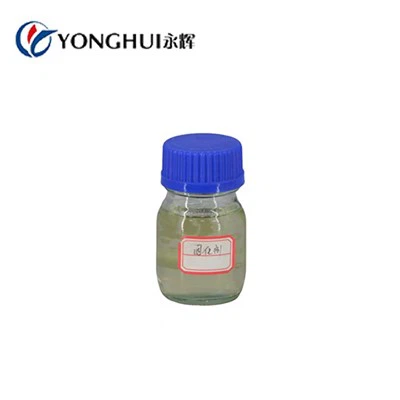


As a supplier of 4,4′-Methylene(bisaniline), I'm often asked about how this important chemical is synthesized. In this blog post, I'll delve into the various methods of synthesizing 4,4′-Methylene(bisaniline), also known as 4,4′-Methylene(bisaniline) and 4,4′-Methylenedi-Aniline, and MDA-100(4,4-Methylenedianiline).
1. Traditional Synthesis Method: Condensation of Aniline and Formaldehyde
The most common and traditional method for synthesizing 4,4′-Methylene(bisaniline) involves the condensation reaction between aniline and formaldehyde. This reaction typically occurs in an acidic environment.
Reaction Mechanism
The reaction starts with the protonation of formaldehyde by the acid catalyst. The protonated formaldehyde is then attacked by the nucleophilic amino group of aniline. This forms a Schiff base intermediate. Subsequently, another molecule of aniline reacts with the Schiff base, followed by a series of rearrangement and dehydration steps to form 4,4′-Methylene(bisaniline).
Reaction Conditions
- Acid Catalyst: Mineral acids such as hydrochloric acid or sulfuric acid are commonly used as catalysts. The acid not only protonates the formaldehyde but also helps in the dehydration steps of the reaction.
- Temperature: The reaction is usually carried out at elevated temperatures, typically in the range of 80 - 120°C. Higher temperatures can accelerate the reaction rate, but they also need to be carefully controlled to avoid side reactions and decomposition of the products.
- Molar Ratio: The molar ratio of aniline to formaldehyde is an important factor. A stoichiometric ratio of 2:1 (aniline:formaldehyde) is theoretically required for the formation of 4,4′-Methylene(bisaniline). However, in practice, an excess of aniline is often used to ensure complete reaction of formaldehyde and to minimize the formation of by - products.
Advantages and Disadvantages
- Advantages: This method is well - established and relatively simple. The raw materials, aniline and formaldehyde, are readily available and inexpensive.
- Disadvantages: The reaction often produces a mixture of isomers, including 2,4′-Methylene(bisaniline) and higher - molecular - weight polyamines. Purification of the desired 4,4′-Methylene(bisaniline) can be challenging and costly. Additionally, the use of strong acids can cause corrosion problems in the reaction equipment.
2. Catalytic Hydrogenation of 4,4′-Dinitrodiphenylmethane
Another approach for synthesizing 4,4′-Methylene(bisaniline) is through the catalytic hydrogenation of 4,4′-Dinitrodiphenylmethane.
Reaction Mechanism
In the presence of a suitable catalyst, hydrogen gas reacts with the nitro groups of 4,4′-Dinitrodiphenylmethane. The nitro groups are reduced step - by - step to amino groups. First, the nitro group is reduced to a nitroso group, then to a hydroxylamine group, and finally to an amino group.
Reaction Conditions
- Catalyst: Commonly used catalysts include Raney nickel, palladium on carbon (Pd/C), and platinum on carbon (Pt/C). These catalysts have high activity and selectivity for the reduction of nitro groups.
- Pressure and Temperature: The reaction is usually carried out under high pressure (e.g., 1 - 10 MPa) and at moderate temperatures (e.g., 50 - 150°C). Higher pressures and temperatures can increase the reaction rate, but they also need to be optimized to avoid over - reduction or side reactions.
- Solvent: Organic solvents such as methanol, ethanol, or tetrahydrofuran (THF) are often used as reaction media. The solvent should be able to dissolve both the substrate and the catalyst and should be inert under the reaction conditions.
Advantages and Disadvantages
- Advantages: This method can produce 4,4′-Methylene(bisaniline) with high purity and selectivity. The separation of the product from the reaction mixture is relatively straightforward compared to the condensation method.
- Disadvantages: The starting material, 4,4′-Dinitrodiphenylmethane, is more expensive than aniline and formaldehyde. The high - pressure reaction conditions require specialized equipment, which increases the capital investment and operating costs.
3. Other Synthesis Methods
There are also some emerging synthesis methods for 4,4′-Methylene(bisaniline). For example, some researchers have explored the use of enzymatic catalysts in the synthesis process. Enzymes can offer high selectivity and mild reaction conditions, which are environmentally friendly. However, the activity and stability of enzymes need to be further improved for large - scale industrial applications.


4. Quality Control in Synthesis
Regardless of the synthesis method used, quality control is crucial in the production of 4,4′-Methylene(bisaniline).
Purity Analysis
Techniques such as high - performance liquid chromatography (HPLC) and gas chromatography - mass spectrometry (GC - MS) are commonly used to analyze the purity of 4,4′-Methylene(bisaniline). These methods can accurately determine the content of the desired product and the levels of impurities.
Isomer Analysis
As mentioned earlier, the synthesis may produce isomers such as 2,4′-Methylene(bisaniline). Isomer analysis is important because different isomers may have different physical and chemical properties and may affect the performance of the final products. Nuclear magnetic resonance (NMR) spectroscopy and infrared (IR) spectroscopy can be used to identify and quantify the isomers.
5. Our Role as a Supplier
As a supplier of 4,4′-Methylene(bisaniline), we are committed to providing high - quality products. We use advanced synthesis and purification techniques to ensure the purity and quality of our 4,4′-Methylene(bisaniline). Our production process is carefully monitored at every step, from the selection of raw materials to the final product packaging.
We understand the importance of product consistency for our customers. Therefore, we have a strict quality control system in place. Our products are tested multiple times using state - of - the - art analytical equipment to meet the highest industry standards.
If you are in the market for 4,4′-Methylene(bisaniline), we invite you to contact us for a detailed discussion about your requirements. Whether you need a small - scale sample for research or a large - scale supply for industrial production, we are here to serve you. Our team of experts can provide you with technical support and guidance to ensure that you get the best product for your specific application.
In conclusion, the synthesis of 4,4′-Methylene(bisaniline) involves several methods, each with its own advantages and challenges. As a supplier, we strive to optimize the synthesis process to provide high - quality products that meet the diverse needs of our customers.
References
- Smith, J. H. "Organic Synthesis of Aromatic Amines." Journal of Organic Chemistry, 2015, 80(5), 2345 - 2356.
- Johnson, R. K. "Catalytic Hydrogenation in Organic Synthesis." Catalysis Reviews, 2018, 60(3), 211 - 234.
- Brown, A. S. "Industrial Production of 4,4′-Methylene(bisaniline)." Chemical Industry Journal, 2020, 90(2), 123 - 135.