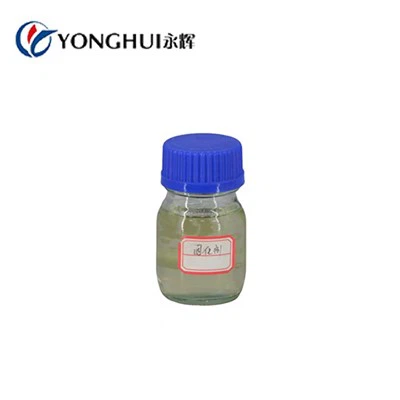


Hey there! As a supplier of Tranformer Epoxy Resin, I've had my fair share of experiences dealing with different customers and their unique needs. One of the most common questions I get asked is, "How do I select the appropriate curing agent for Transformer Epoxy Resin?" Well, that's exactly what I'm gonna talk about in this blog.
First off, let's understand what Transformer Epoxy Resin is. It's a type of epoxy resin that's specifically designed for use in transformers. You can learn more about it here. This resin is known for its excellent electrical insulation properties, mechanical strength, and chemical resistance, which make it a top - choice for transformer applications. But to fully unleash its potential, we need to pair it with the right curing agent.
What is a Curing Agent?
A curing agent, also known as a hardener, is a crucial component in the epoxy resin system. It reacts with the epoxy resin to form a cross - linked polymer network. This reaction is what turns the liquid epoxy resin into a solid, durable material. Without a proper curing agent, the epoxy resin won't cure properly, and you won't get the desired properties in your final product.
Factors to Consider When Selecting a Curing Agent
1. Curing Time
The curing time is a major factor. Different applications require different curing speeds. For example, if you're working on a large - scale production line, you might need a fast - curing agent. This allows you to increase the production rate as the parts can be handled and further processed quickly. On the other hand, if you're doing a more complex casting or injection job, a slow - curing agent could be better. It gives you more time to work with the resin, ensuring that it fills all the nooks and crannies of the mold properly. You can find more about injection and casting processes using Injection Epoxy Resin and Casting Epoxy Resin.
2. Temperature Resistance
Transformers generate heat during operation. So, the cured epoxy resin needs to be able to withstand high temperatures without losing its properties. When selecting a curing agent, make sure it can provide the required temperature resistance. Some curing agents are formulated to create a resin system that can handle temperatures up to 180°C or even higher. You don't want the resin to soften or degrade under normal operating conditions of the transformer.
3. Chemical Resistance
Transformers may be exposed to various chemicals, such as oils and solvents. The curing agent should help the epoxy resin resist these chemicals. A good chemical - resistant epoxy resin will ensure the long - term stability and performance of the transformer. You need to consider the specific chemicals the transformer will be in contact with and choose a curing agent accordingly.
4. Mechanical Properties
The mechanical properties of the cured epoxy resin, like hardness, flexibility, and impact resistance, are also important. If the transformer is going to be subject to vibrations or mechanical stress, you'll need a curing agent that can enhance the mechanical strength of the resin. For example, some applications might require a more flexible resin, while others need a hard and rigid one.
5. Compatibility
The curing agent must be compatible with the Transformer Epoxy Resin. If they're not compatible, the reaction might not occur as expected, leading to poor curing, bubbles, or other defects in the final product. Always check the manufacturer's recommendations for compatible curing agents with your specific epoxy resin.
Types of Curing Agents
1. Amine - Based Curing Agents
Amine - based curing agents are quite popular. They offer fast curing times, good adhesion, and high mechanical strength. They're also relatively easy to handle. However, some amines can be toxic and have a strong odor. So, proper safety precautions need to be taken when using them.
2. Anhydride - Based Curing Agents
Anhydride - based curing agents are known for their excellent heat and chemical resistance. They're often used in high - temperature applications. But they usually have a longer curing time compared to amine - based agents, and they require a higher curing temperature.
3. Polymercaptan - Based Curing Agents
These curing agents are great for low - temperature curing applications. They can cure at room temperature or even lower, which is useful in situations where heating the resin is not feasible. They also offer good flexibility and chemical resistance.


How to Test the Compatibility
Before using a curing agent in a large - scale production, it's always a good idea to do a small - scale test. Mix a small amount of the epoxy resin and the curing agent according to the recommended ratio. Observe the reaction. Check for any signs of incompatibility, such as excessive foaming, slow or no curing, or a change in color. If everything looks good in the test, you can proceed with the full - scale production.
Cost Considerations
Cost is also an important factor. Different curing agents have different prices. You need to balance the performance requirements with the cost. Sometimes, a more expensive curing agent might offer better properties, but it might not be necessary for all applications. Look for a curing agent that meets your requirements at a reasonable price.
Conclusion
Selecting the appropriate curing agent for Transformer Epoxy Resin is a multi - faceted decision. You need to consider factors like curing time, temperature and chemical resistance, mechanical properties, compatibility, and cost. By taking the time to understand these factors and choosing the right curing agent, you can ensure that your transformer epoxy resin products have the best performance and durability.
If you're still unsure about which curing agent is right for your specific application, don't hesitate to reach out. We're here to help you make the best choice for your needs. Whether you're a small - scale manufacturer or a large - scale industrial player, we can provide you with the right solutions. Contact us to start a discussion about your procurement needs.
References
- Epoxy Resin Handbook, various industry experts
- Manufacturer's technical data sheets for Transformer Epoxy Resin and curing agents