

What is the Compatibility of 4,4 - Diaminodicyclohexylmethane with Other Polymers?
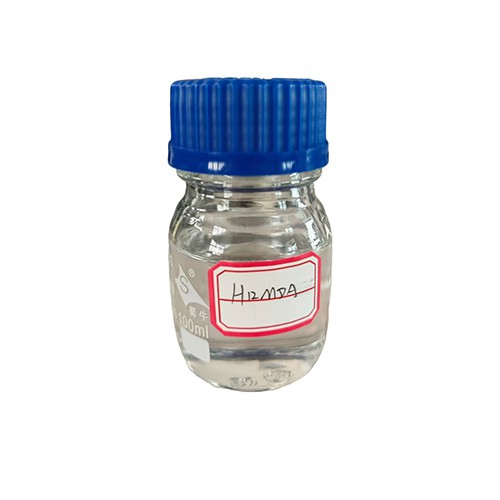
As a trusted supplier of 4,4 - diaminodicyclohexylmethane, also known as 4,4 - diaminodicyclohexylmethane, 4,4 - Methylenebiscyclohexylamine, or H12MDA, I am often asked about its compatibility with other polymers. In this blog post, I will delve into this topic, exploring the factors that influence compatibility and the implications for various applications.
Understanding 4,4 - Diaminodicyclohexylmethane
4,4 - Diaminodicyclohexylmethane is a cycloaliphatic diamine that is widely used in the production of high - performance polymers. It has several desirable properties, such as excellent mechanical strength, good chemical resistance, and high thermal stability. These properties make it a valuable building block for polymers in a range of industries, including automotive, aerospace, and electronics.
Factors Affecting Compatibility
The compatibility of 4,4 - diaminodicyclohexylmethane with other polymers is determined by several factors:
- Chemical Structure: The chemical structure of the polymer and 4,4 - diaminodicyclohexylmethane plays a crucial role. Polymers with similar chemical structures are more likely to be compatible. For example, polymers with polar functional groups may have better compatibility with 4,4 - diaminodicyclohexylmethane, which also has polar amino groups.
- Molecular Weight: The molecular weight of the polymer can affect compatibility. Generally, polymers with lower molecular weights are more likely to be compatible with 4,4 - diaminodicyclohexylmethane. This is because lower - molecular - weight polymers have greater mobility and can mix more easily with the diamine.
- Thermodynamic Interactions: Thermodynamic interactions between the polymer and 4,4 - diaminodicyclohexylmethane are important. These interactions include van der Waals forces, hydrogen bonding, and dipole - dipole interactions. Favorable thermodynamic interactions lead to better compatibility.
Compatibility with Different Types of Polymers
- Epoxy Resins
4,4 - Diaminodicyclohexylmethane is commonly used as a curing agent for epoxy resins. It has excellent compatibility with epoxy resins, forming cross - linked networks with high mechanical strength and good chemical resistance. The reaction between the amino groups of 4,4 - diaminodicyclohexylmethane and the epoxy groups of the resin results in a stable and durable polymer. - Polyurethanes
In the production of polyurethanes, 4,4 - diaminodicyclohexylmethane can be used as a chain extender. It has good compatibility with polyurethane prepolymers, improving the mechanical properties of the final polyurethane product. The resulting polyurethanes have enhanced abrasion resistance, flexibility, and tear strength. - Polyamides
4,4 - Diaminodicyclohexylmethane can be incorporated into polyamide synthesis. It can react with dicarboxylic acids to form polyamides with unique properties. The compatibility with other polyamide - forming monomers is crucial for achieving the desired polymer structure and properties. The resulting polyamides may have improved thermal stability and chemical resistance.
Implications for Applications
The compatibility of 4,4 - diaminodicyclohexylmethane with other polymers has significant implications for various applications:
- Coatings: In coating applications, the compatibility of 4,4 - diaminodicyclohexylmethane with the polymer binder affects the quality of the coating. Good compatibility leads to a smooth, uniform coating with excellent adhesion and resistance to environmental factors.
- Adhesives: For adhesives, compatibility is essential for achieving strong bonding between different substrates. 4,4 - diaminodicyclohexylmethane - based adhesives with good compatibility can provide high - strength bonds in various applications, such as bonding metal, plastic, and composite materials.
- Composite Materials: In composite materials, the compatibility of 4,4 - diaminodicyclohexylmethane with the matrix polymer and the reinforcing fibers is critical. It ensures good dispersion of the fibers and strong interfacial bonding, resulting in composite materials with superior mechanical properties.
Testing Compatibility
To determine the compatibility of 4,4 - diaminodicyclohexylmethane with other polymers, several testing methods can be used:
- Visual Inspection: A simple visual inspection can provide initial information about compatibility. If the mixture of 4,4 - diaminodicyclohexylmethane and the polymer shows signs of phase separation, such as cloudiness or layering, it may indicate poor compatibility.
- Differential Scanning Calorimetry (DSC): DSC can be used to study the thermal behavior of the mixture. Changes in the melting point, glass transition temperature, or heat of fusion can indicate the degree of compatibility between 4,4 - diaminodicyclohexylmethane and the polymer.
- Scanning Electron Microscopy (SEM): SEM can be used to examine the morphology of the mixture at the microscopic level. It can reveal the distribution of 4,4 - diaminodicyclohexylmethane in the polymer matrix and any signs of phase separation.
Conclusion
The compatibility of 4,4 - diaminodicyclohexylmethane with other polymers is a complex but important aspect of polymer science. By understanding the factors that influence compatibility and using appropriate testing methods, we can optimize the performance of polymers in various applications. As a supplier of 4,4 - diaminodicyclohexylmethane, we are committed to providing high - quality products and technical support to our customers. If you are interested in exploring the use of 4,4 - diaminodicyclohexylmethane in your polymer applications or have any questions about compatibility, please do not hesitate to contact us for further discussion and potential procurement opportunities.

References
- "Handbook of Epoxy Resins" by Henry Lee and Kris Neville
- "Polyurethane Handbook" by Gunter Oertel
- "Polymer Science and Technology" by James Mark, et al.