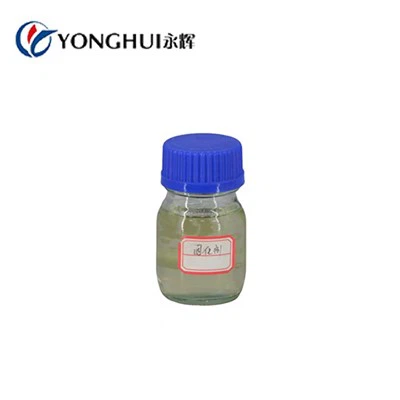


As a supplier of Z - 133 Expoxy Resin Curing Agent, I am often asked about the impact of different curing temperatures on the performance of this product. In this blog post, I will delve into the details of how varying curing temperatures can affect the properties and performance of Z - 133 Expoxy Resin Curing Agent.
Understanding Z - 133 Expoxy Resin Curing Agent
Before discussing the effect of curing temperatures, it's essential to understand what Z - 133 Expoxy Resin Curing Agent is. Z - 133 is a high - quality curing agent designed for epoxy resins. It offers excellent mechanical properties, chemical resistance, and adhesion when used in epoxy resin systems. The curing process is a chemical reaction between the epoxy resin and the curing agent, which transforms the liquid resin into a solid, cross - linked polymer.
1. Impact on Curing Time
One of the most obvious effects of different curing temperatures is on the curing time. Generally, as the curing temperature increases, the curing time decreases. At lower temperatures, the chemical reaction between the epoxy resin and the Z - 133 curing agent proceeds at a slower pace. The molecules have less kinetic energy, so the rate of reaction is reduced. For example, at a temperature of around 20°C, the curing time of Z - 133 in an epoxy resin system might be several hours or even days, depending on the formulation and the desired level of curing.
On the other hand, when the temperature is raised to 60°C or higher, the reaction rate significantly increases. The molecules move more rapidly, and the cross - linking reaction occurs more quickly. This can reduce the curing time to just a few hours. However, it's important to note that extremely high temperatures can also cause problems. If the temperature is too high, the reaction may occur too rapidly, leading to incomplete curing in some areas or the formation of internal stresses within the cured material.
2. Influence on Mechanical Properties
The mechanical properties of the cured epoxy resin, such as hardness, tensile strength, and flexural strength, are also affected by the curing temperature. At lower curing temperatures, the cross - linking density may be lower, resulting in a softer and more flexible cured material. The lower cross - linking density means that there are fewer chemical bonds holding the polymer chains together, allowing for more movement between the chains.
As the curing temperature increases, the cross - linking density generally increases. This leads to a harder and stronger cured material. For instance, a sample cured at 80°C may have a higher tensile strength compared to one cured at 20°C. However, if the temperature is too high during curing, it can cause thermal degradation of the epoxy resin and the curing agent. This can lead to a decrease in mechanical properties, such as a reduction in elongation at break and an increase in brittleness.


3. Effect on Chemical Resistance
Chemical resistance is another important property of epoxy resin systems cured with Z - 133. The curing temperature can influence the chemical resistance of the cured material. A well - cured epoxy resin with a high cross - linking density, which can be achieved at an appropriate elevated temperature, is more resistant to chemical attack.
At lower temperatures, the incomplete cross - linking may leave some reactive sites in the polymer structure. These reactive sites can react with chemicals in the environment, reducing the chemical resistance of the material. For example, a cured epoxy resin sample that was cured at a low temperature may be more susceptible to solvents or acids compared to a sample cured at an optimal higher temperature. However, similar to the mechanical properties, excessive heat can also damage the chemical structure of the cured material, reducing its chemical resistance.
4. Thermal Stability
The thermal stability of the cured epoxy resin is also related to the curing temperature. A higher curing temperature can generally improve the thermal stability of the material. During the curing process at an appropriate elevated temperature, the cross - linking reaction is more complete, forming a more stable polymer network. This network can withstand higher temperatures without significant degradation.
When the curing temperature is too low, the thermal stability of the cured material may be poor. The polymer may start to soften or decompose at relatively low temperatures. On the other hand, if the curing temperature is extremely high, it can cause over - curing and the formation of weak bonds in the polymer structure, which can also reduce the thermal stability.
5. Shrinkage and Dimensional Stability
Shrinkage is a common issue in epoxy resin curing. The curing temperature can affect the amount of shrinkage that occurs during the curing process. At lower temperatures, the shrinkage rate may be lower because the reaction is slower, and the polymer chains have more time to adjust their positions.
As the temperature increases, the shrinkage rate generally increases. The rapid cross - linking at higher temperatures can cause the polymer to contract more quickly, leading to higher shrinkage. This can affect the dimensional stability of the cured part. If the shrinkage is not controlled properly, it can cause warping or cracking in the cured material.
Real - World Applications and Considerations
In real - world applications, the choice of curing temperature depends on the specific requirements of the project. For example, in applications where a long working time is needed, such as in some casting or laminating processes, a lower curing temperature may be preferred. This allows for more time to manipulate the epoxy resin before it cures.
In applications where high mechanical strength and chemical resistance are crucial, such as in industrial coatings or structural adhesives, a higher curing temperature may be necessary. However, it's important to balance the benefits of higher temperature curing with the potential risks, such as thermal degradation and excessive shrinkage.
Conclusion
In conclusion, different curing temperatures have a significant impact on the performance of Z - 133 Expoxy Resin Curing Agent. The curing temperature affects the curing time, mechanical properties, chemical resistance, thermal stability, and shrinkage of the cured epoxy resin. As a supplier, I recommend carefully considering the specific requirements of your application when choosing the curing temperature. Whether you need a flexible and soft material or a hard and strong one, understanding the relationship between curing temperature and performance is essential.
If you are interested in learning more about Z - 133 Expoxy Resin Curing Agent or have any questions regarding its application at different curing temperatures, please feel free to contact us for a detailed discussion and potential purchase negotiation. We are committed to providing high - quality products and professional technical support to meet your needs.
References
- Lee, H., & Neville, K. (1967). Handbook of Epoxy Resins. McGraw - Hill.
- May, C. A. (Ed.). (1988). Epoxy Resins: Chemistry and Technology. Marcel Dekker.