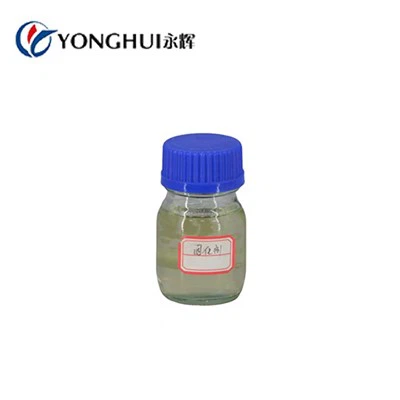


Hey there! As a supplier of the Z-133 Expoxy Resin Curing Agent, I'm super excited to walk you through its production process. This stuff is pretty amazing, and I think you'll find it really interesting.
First off, let's talk a bit about what the Z-133 Expoxy Resin Curing Agent is. It's a key component in a whole bunch of industrial applications. You can check out more details about it here: Z-133 Expoxy Resin Curing Agent. This curing agent plays a crucial role in making epoxy resins harden and form a strong, durable material.
Raw Materials
The production of the Z-133 Expoxy Resin Curing Agent starts with some specific raw materials. One of the main ones is 4,4′-Methylenedi-Aniline, also known as 4,4-Methylenedianiline. You can learn more about this chemical here: 4,4′-Methylenedi-Aniline and 4,4-Methylenedianiline. This compound is a critical building block for our curing agent. It has certain chemical properties that make it ideal for reacting with epoxy resins and initiating the curing process.
We source our 4,4′-Methylenedi-Aniline from reliable suppliers. Quality control is super important at this stage. We make sure that the raw material meets our strict standards in terms of purity and chemical composition. Any impurities in the 4,4′-Methylenedi-Aniline could affect the final quality of the Z-133 Expoxy Resin Curing Agent.
Pre - treatment
Once we have the raw 4,4′-Methylenedi-Aniline, it goes through a pre - treatment process. This step is all about getting the raw material in the right state for the subsequent reactions. We first check the physical state of the 4,4′-Methylenedi-Aniline. It usually comes in a solid form, and we might need to heat it to a specific temperature to turn it into a liquid. This makes it easier to handle and mix with other substances later on.
During the pre - treatment, we also remove any small amounts of moisture that might be present in the 4,4′-Methylenedi-Aniline. Moisture can interfere with the chemical reactions that are going to happen later, so we use special drying techniques to get rid of it. This might involve using desiccants or applying a gentle vacuum to the heated 4,4′-Methylenedi-Aniline.
Chemical Reactions
After pre - treatment, the real action starts with the chemical reactions. We mix the pre - treated 4,4′-Methylenedi-Aniline with other carefully selected chemicals in a reaction vessel. The reaction vessel is designed to control the temperature, pressure, and mixing speed. These factors are crucial because they determine how the chemicals react with each other.
The reaction between 4,4′-Methylenedi-Aniline and the other chemicals is an exothermic reaction, which means it releases heat. We have to be very careful to control the temperature during this process. If the temperature gets too high, it could cause side reactions or even damage the desired product. So, we use cooling systems to keep the temperature within a specific range.
The reaction usually takes several hours to complete. During this time, we constantly monitor the chemical composition of the mixture using analytical techniques. This helps us make sure that the reaction is proceeding as planned and that the right amount of the Z-133 Expoxy Resin Curing Agent is being formed.
Purification
Once the chemical reactions are complete, the resulting mixture is far from pure. It contains the Z-133 Expoxy Resin Curing Agent, but also some by - products and unreacted raw materials. So, we need to purify the mixture to get the high - quality Z-133 Expoxy Resin Curing Agent that we want to sell.
One of the common purification methods we use is distillation. Distillation takes advantage of the different boiling points of the substances in the mixture. We heat the mixture in a distillation column, and as the temperature rises, the substances with lower boiling points vaporize first. We collect these vapors and condense them back into a liquid. By carefully controlling the temperature, we can separate the Z-133 Expoxy Resin Curing Agent from the other components.
We also use filtration to remove any solid particles that might be present in the mixture. This helps to improve the clarity and purity of the final product. After filtration, the Z-133 Expoxy Resin Curing Agent is much cleaner, but we might still do some additional purification steps, like chromatography, to further enhance its quality.
Quality Control
Quality control is a continuous process throughout the production of the Z-133 Expoxy Resin Curing Agent. After purification, we conduct a series of tests on the final product. We test its chemical composition using techniques like nuclear magnetic resonance (NMR) and infrared spectroscopy (IR). These methods help us confirm that the Z-133 Expoxy Resin Curing Agent has the correct chemical structure.
We also test the physical properties of the Z-133 Expoxy Resin Curing Agent, such as its viscosity, density, and melting point. These properties are important because they determine how the curing agent will perform when used with epoxy resins. If the physical properties are not within the specified range, the Z-133 Expoxy Resin Curing Agent might not work as expected in the end - user applications.
Packaging
Once the Z-133 Expoxy Resin Curing Agent passes all the quality control tests, it's time for packaging. We package the curing agent in containers that are designed to protect it from light, moisture, and air. These factors can degrade the quality of the Z-133 Expoxy Resin Curing Agent over time.
We usually use sealed plastic or metal containers. The containers are labeled clearly with information about the product, including its name, chemical composition, storage conditions, and safety precautions. This helps our customers handle and store the Z-133 Expoxy Resin Curing Agent correctly.
Conclusion
So, that's the production process of the Z-133 Expoxy Resin Curing Agent in a nutshell. It's a complex but well - controlled process that ensures we produce a high - quality product. Whether you're in the construction industry, automotive industry, or any other field that uses epoxy resins, the Z-133 Expoxy Resin Curing Agent can be a great choice for you.
If you're interested in learning more about our Z-133 Expoxy Resin Curing Agent or are thinking about making a purchase, feel free to reach out to us. We're always happy to discuss your specific needs and how our product can fit into your projects.


References
- Chemical Engineering Handbook: Covers general principles of chemical reactions, purification methods, and quality control in chemical production.
- Journal of Applied Polymer Science: Contains research on the performance of epoxy resin curing agents and their production processes.
- Industrial Chemistry Textbooks: Provide in - depth knowledge about the production of specialty chemicals like the Z-133 Expoxy Resin Curing Agent.