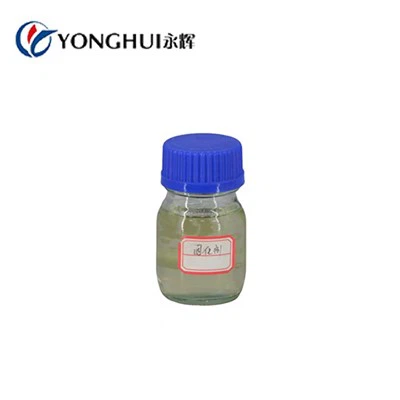


As a supplier of Z-133 Expoxy Resin Curing Agent, I often receive inquiries about its recycling methods. In this blog post, I will delve into the recycling process of Z-133 Expoxy Resin Curing Agent, aiming to provide valuable insights for both environmental protection and cost - effectiveness.
Understanding Z - 133 Expoxy Resin Curing Agent
Before discussing the recycling method, it is essential to understand what Z-133 Expoxy Resin Curing Agent is. Z-133 Expoxy Resin Curing Agent is a specialized chemical compound used in the epoxy resin industry. Epoxy resins are widely used in various applications, such as coatings, adhesives, and composites, due to their excellent mechanical properties, chemical resistance, and adhesion. The curing agent plays a crucial role in the cross - linking reaction of epoxy resins, which transforms the liquid resin into a solid, durable material.
The Z-133 Expoxy Resin Curing Agent contains specific chemical components that react with epoxy resins under certain conditions. These components are carefully formulated to ensure optimal curing performance, including proper curing time, hardness, and flexibility of the final product.
The Need for Recycling
Recycling Z-133 Expoxy Resin Curing Agent is of great significance for several reasons. Firstly, from an environmental perspective, proper recycling can reduce the amount of chemical waste released into the environment. Chemical waste can pose significant risks to soil, water, and air quality if not handled correctly. By recycling the curing agent, we can minimize these potential environmental hazards.
Secondly, recycling is economically beneficial. The production of new Z-133 Expoxy Resin Curing Agent requires raw materials and energy. Recycling can reuse a significant portion of the existing curing agent, reducing the need for new raw material extraction and production, which in turn can lower production costs for manufacturers.
Recycling Methods
Physical Separation
One of the primary recycling methods for Z-133 Expoxy Resin Curing Agent is physical separation. This method involves separating the curing agent from other substances in the waste mixture. For example, if the curing agent is mixed with epoxy resin that has not fully cured, physical processes such as filtration, sedimentation, or centrifugation can be used.
Filtration is a simple yet effective method. A filter with an appropriate pore size can be used to separate solid particles or larger impurities from the liquid curing agent. Sedimentation relies on the difference in density between the curing agent and other substances. By allowing the mixture to stand for a certain period, the heavier substances will settle at the bottom, and the relatively pure curing agent can be decanted from the top. Centrifugation is a more efficient way to separate substances based on density. By spinning the mixture at high speed, the centrifugal force will cause the separation of different components more rapidly.
Chemical Treatment
Chemical treatment is another important recycling approach. This method involves using specific chemical reactions to break down or modify the waste curing agent to make it reusable. For instance, some chemical agents can be added to the waste curing agent to reverse certain chemical reactions that occurred during the curing process.
However, chemical treatment needs to be carefully controlled. The reaction conditions, such as temperature, pressure, and the amount of chemical reagents, must be precisely adjusted to ensure that the recycled curing agent has the same or similar properties as the original one. Otherwise, the performance of the epoxy resin cured by the recycled agent may be affected.
Distillation
Distillation is a common method for recycling Z-133 Expoxy Resin Curing Agent. Since different chemical components in the curing agent have different boiling points, distillation can be used to separate and purify the curing agent. By heating the waste mixture to a specific temperature, the component with the lowest boiling point will vaporize first, and then it can be condensed and collected.
This method can effectively remove impurities and separate different components of the curing agent. However, distillation requires precise temperature control and appropriate equipment to ensure high - quality recycling.
Quality Control of Recycled Curing Agent
After recycling, it is crucial to conduct strict quality control on the recycled Z-133 Expoxy Resin Curing Agent. Quality control measures include testing the chemical composition, physical properties, and curing performance of the recycled agent.
Chemical analysis methods, such as chromatography and spectroscopy, can be used to determine the chemical composition of the recycled curing agent. Physical property tests, such as viscosity, density, and melting point, can help ensure that the recycled agent has similar physical characteristics to the original one. Curing performance tests involve using the recycled curing agent to cure epoxy resin and evaluating the properties of the cured product, such as hardness, adhesion, and chemical resistance.
Comparison with Related Chemicals
It is also interesting to compare the recycling of Z-133 Expoxy Resin Curing Agent with other related chemicals. For example, 4,4 - Diaminodiphenylmethane and MDA - 60(4,4 - Methylenedianiline) are also used as curing agents in the epoxy resin industry.
The recycling methods of these chemicals may have some similarities and differences. Similarities may exist in physical separation methods, such as filtration and sedimentation. However, due to their different chemical structures and properties, the chemical treatment and distillation conditions may vary. For example, the reaction conditions for chemical treatment of 4,4 - Diaminodiphenylmethane may be different from those of Z-133 Expoxy Resin Curing Agent because of their different reactivity and stability.
Conclusion
In conclusion, the recycling of Z-133 Expoxy Resin Curing Agent is a complex but necessary process. Physical separation, chemical treatment, and distillation are the main recycling methods, each with its own advantages and challenges. Strict quality control is essential to ensure that the recycled curing agent can be effectively used in the epoxy resin industry.
As a supplier of Z-133 Expoxy Resin Curing Agent, we are committed to promoting sustainable practices in the chemical industry. We believe that by sharing our knowledge and experience in recycling, we can contribute to a more environmentally friendly and economically viable future.


If you are interested in purchasing Z-133 Expoxy Resin Curing Agent or have any questions about its recycling or application, please feel free to contact us for further discussion and business negotiation.
References
- "Epoxy Resins: Chemistry and Technology" by Charles A. May and Yoshio Tanaka.
- Research papers on chemical recycling in the epoxy resin industry from relevant scientific journals.