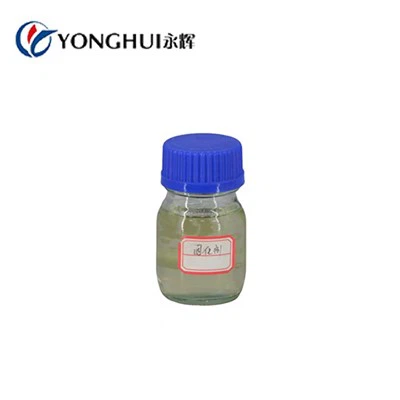


H12MDA, also known as 4,4'-Methylenebiscyclohexylamine, 4,4′-Methylendicyclohexanamine, or 4,4-diaminodicyclohexylmethane, is a significant chemical compound with a wide range of applications in various industries. As a reliable H12MDA supplier, I often receive inquiries regarding its solubility in water. In this blog post, I will delve into the solubility of H12MDA in water, exploring the factors that influence it and its practical implications.
Understanding H12MDA
Before discussing its solubility, let's briefly introduce H12MDA. H12MDA is a cycloaliphatic diamine with the chemical formula C13H26N2. It is a colorless to pale-yellow liquid at room temperature, known for its excellent chemical and thermal stability. This compound is widely used in the production of high-performance polymers, such as polyurethanes, polyamides, and epoxy resins, due to its ability to enhance the mechanical properties, chemical resistance, and weatherability of these materials.
Solubility of H12MDA in Water
The solubility of a compound in water is determined by its chemical structure and the intermolecular forces between the compound and water molecules. In the case of H12MDA, its solubility in water is relatively low. This is primarily because H12MDA is a non-polar or weakly polar compound, while water is a highly polar solvent. The general rule of thumb in solubility is "like dissolves like," meaning that polar solvents tend to dissolve polar compounds, and non-polar solvents dissolve non-polar compounds.
The cycloaliphatic structure of H12MDA consists of two cyclohexyl rings connected by a methylene bridge, with two amino groups (-NH2) attached to the cyclohexyl rings. The cyclohexyl rings are non-polar, and the overall molecular structure of H12MDA has a relatively low polarity. Water molecules, on the other hand, have a high dipole moment due to the electronegativity difference between oxygen and hydrogen atoms, resulting in a strong polar nature. The non-polar nature of H12MDA makes it difficult for water molecules to interact with it through dipole-dipole or hydrogen bonding interactions, leading to limited solubility.
However, the amino groups in H12MDA can form hydrogen bonds with water molecules to some extent. Hydrogen bonding occurs when a hydrogen atom bonded to a highly electronegative atom (such as nitrogen, oxygen, or fluorine) interacts with another electronegative atom. The amino groups in H12MDA can act as hydrogen bond donors and acceptors, allowing for some degree of interaction with water molecules. This interaction contributes to the small amount of H12MDA that can dissolve in water.
Factors Affecting the Solubility of H12MDA in Water
Several factors can influence the solubility of H12MDA in water, including temperature, pH, and the presence of other solutes.
Temperature
Temperature has a significant impact on the solubility of most compounds in water. In general, the solubility of solids and liquids in water increases with increasing temperature. This is because higher temperatures provide more energy to overcome the intermolecular forces holding the solute particles together and to break the hydrogen bonds between water molecules. For H12MDA, as the temperature rises, the kinetic energy of the molecules increases, allowing for more effective interaction between H12MDA and water molecules. This results in an increase in the solubility of H12MDA in water. However, it should be noted that even at elevated temperatures, the solubility of H12MDA remains relatively low due to its non-polar nature.
pH
The pH of the solution can also affect the solubility of H12MDA. The amino groups in H12MDA are basic and can react with acids to form salts. When the pH of the solution is low (acidic), the amino groups in H12MDA can be protonated, forming positively charged ammonium ions. These ammonium ions are more polar than the neutral H12MDA molecules and can interact more effectively with water molecules through ion-dipole interactions. As a result, the solubility of H12MDA increases in acidic solutions. Conversely, in basic solutions, the amino groups remain in their neutral form, and the solubility of H12MDA is relatively low.
Presence of Other Solutes
The presence of other solutes in the solution can also influence the solubility of H12MDA in water. Some solutes can interact with H12MDA or water molecules, either enhancing or reducing its solubility. For example, the addition of salts or other polar compounds can change the ionic strength and the dielectric constant of the solution, which can affect the solubility of H12MDA. In some cases, the presence of certain solutes can form complexes with H12MDA, increasing its solubility in water.
Practical Implications of H12MDA Solubility in Water
The low solubility of H12MDA in water has several practical implications in its industrial applications.
Polymer Synthesis
In the production of polymers, such as polyurethanes and epoxy resins, H12MDA is often used as a curing agent or a chain extender. The low solubility of H12MDA in water can be advantageous in some cases, as it allows for better control of the reaction process. Since H12MDA does not readily dissolve in water, it can be added to the reaction mixture in a controlled manner, preventing premature reactions and ensuring uniform curing of the polymer. However, it also means that special handling and mixing techniques may be required to ensure proper dispersion of H12MDA in the polymer matrix.
Environmental Considerations
The low solubility of H12MDA in water also has implications for its environmental fate and transport. When H12MDA is released into the environment, its limited solubility in water reduces the likelihood of it being easily transported in water bodies. This can help to minimize its potential impact on aquatic ecosystems. However, it also means that H12MDA may accumulate in soil or sediment, where it can persist for longer periods and potentially pose a risk to soil organisms.
Conclusion
In conclusion, the solubility of H12MDA in water is relatively low due to its non-polar or weakly polar nature. The cycloaliphatic structure of H12MDA and the limited ability of its amino groups to form hydrogen bonds with water molecules contribute to its poor solubility. However, factors such as temperature, pH, and the presence of other solutes can affect its solubility to some extent. Understanding the solubility of H12MDA in water is crucial for its proper handling, storage, and application in various industries.
As a leading H12MDA supplier, we are committed to providing high-quality H12MDA products and technical support to our customers. If you have any questions about the solubility of H12MDA or its applications, or if you are interested in purchasing H12MDA for your specific needs, please feel free to contact us for further discussion and negotiation. We look forward to working with you to meet your chemical requirements.


References
- Smith, J. K. (2015). Solubility of Organic Compounds in Water. CRC Press.
- Tanaka, K., & Tsuge, S. (2000). Solubility and Thermodynamic Properties of Organic Compounds in Aqueous Solutions. John Wiley & Sons.
- "4,4-Methylenebiscyclohexylamine." [Online]. Available: /special-chemicals/pacm/4-4-methylenebiscyclohexylamine.html
- "4,4′-Methylendicyclohexanamine." [Online]. Available: /special-chemicals/pacm/4-4-methylendicyclohexanamine.html
- "4,4-diaminodicyclohexylmethane." [Online]. Available: /special-chemicals/pacm/4-4-diaminodicyclohexylmethane.html