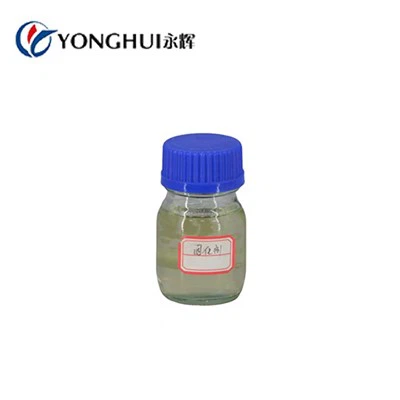


Hey there! As a PACM (4,4'-Methylenebis(cyclohexylamine)) supplier, I often get asked about how PACM can be customized to meet specific needs. Well, you're in the right place because I'm going to break it down for you.
Understanding PACM Basics
First things first, let's quickly go over what PACM is. PACM, also known as 4,4-Methylenebiscyclohexylamine or 4,4-diaminodicyclohexylmethane, is a versatile chemical compound. It's widely used in various industries, including coatings, adhesives, and composites. PACM has some great properties like high chemical resistance, good mechanical strength, and excellent weatherability. But depending on what you're using it for, you might need to tweak it a bit.
Customizing PACM for Different Industries
Coatings Industry
In the coatings industry, one of the main things you might want to customize is the curing time. Some applications require a fast-curing coating, while others need a slower one. We can adjust the formulation of PACM to control the curing speed. For example, if you're coating a large surface area, a slower-curing PACM-based coating gives you more time to apply it evenly without it drying too quickly. On the other hand, if you're working on a small, detailed project, a fast-curing coating can save you a lot of time.
Another aspect is the gloss level. Some customers prefer a high-gloss finish for a shiny, eye-catching look, while others like a matte finish for a more subdued appearance. By adding different additives or modifying the chemical structure of PACM slightly, we can achieve the desired gloss level. And of course, we can also adjust the hardness and flexibility of the coating. If the coating is going to be exposed to a lot of wear and tear, we can make it harder. But if it needs to bend or flex without cracking, we can make it more flexible.
Adhesives Industry
For adhesives, the bond strength is crucial. Different substrates require different levels of bond strength. If you're bonding two hard plastics together, you'll need a PACM-based adhesive with high bond strength. But if you're bonding something more delicate, like a thin layer of fabric to a plastic surface, you might need a more gentle adhesive. We can customize the PACM formulation to optimize the bond strength for your specific substrates.
The viscosity of the adhesive is also an important factor. A low-viscosity adhesive can flow easily into small gaps and crevices, making it ideal for bonding porous materials. A high-viscosity adhesive, on the other hand, is better for vertical surfaces or when you need to hold two parts in place without the adhesive dripping. We can adjust the viscosity of the PACM adhesive to suit your application.
Composites Industry
In the composites industry, the reinforcement type and the matrix resin are key. PACM can be used as a hardener in the matrix resin. We can customize the PACM to work better with different types of reinforcements, such as carbon fiber, glass fiber, or aramid fiber. Each type of reinforcement has its own properties, and by modifying the PACM, we can ensure a strong bond between the reinforcement and the matrix resin.
The processing temperature is another thing we can customize. Some composite manufacturing processes require high temperatures, while others work better at lower temperatures. We can adjust the PACM formulation to be compatible with the processing temperature of your choice. This helps to improve the overall quality and performance of the composite material.
Customizing PACM Based on Performance Requirements
Chemical Resistance
If your application requires high chemical resistance, we can modify the PACM to enhance its resistance to specific chemicals. For example, if it's going to be exposed to acids or alkalis, we can add certain functional groups to the PACM molecule that can withstand those chemicals. This way, the final product will have a longer lifespan and better performance in a harsh chemical environment.
Temperature Resistance
Temperature resistance is also an important consideration. Some applications need to withstand high temperatures, like in automotive engines or industrial ovens. Others need to work well in cold environments, such as in refrigeration units. We can adjust the chemical structure of PACM to improve its temperature resistance. This might involve adding heat-resistant additives or changing the cross-linking density of the PACM polymer.
Customizing PACM for Regulatory Requirements
Different regions have different regulatory requirements when it comes to chemical products. For example, some areas have strict regulations on the use of certain chemicals due to environmental or health concerns. We can customize PACM to meet these regulatory standards. We make sure that the PACM we supply is compliant with all the relevant regulations in your area. This gives you peace of mind knowing that you're using a safe and legal product.
Working with Us for Customized PACM
So, how does the customization process work? When you come to us with your specific needs, we'll have a detailed discussion with you. We'll ask you about your application, the performance requirements, and any regulatory constraints. Then, our team of experts will get to work on developing a customized PACM solution for you.
We use state-of-the-art equipment and advanced analytical techniques to ensure that the customized PACM meets your exact specifications. We also conduct rigorous testing to make sure that the product performs as expected. And throughout the process, we'll keep you updated on the progress and make any necessary adjustments based on your feedback.
If you're interested in customized PACM, don't hesitate to reach out to us. We're here to help you find the perfect solution for your specific needs. Whether you're in the coatings, adhesives, composites, or any other industry, we have the expertise and resources to customize PACM for you. Let's work together to take your product to the next level.

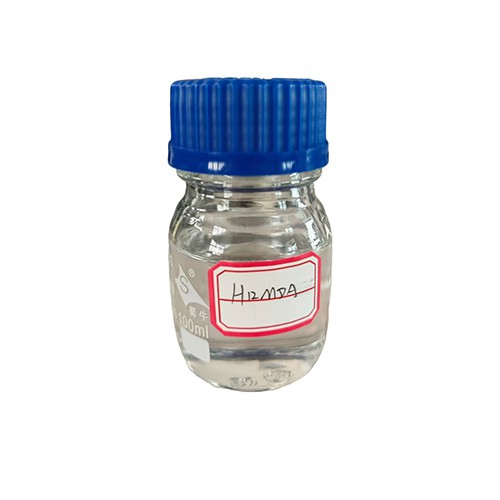
Conclusion
In conclusion, PACM is a highly customizable chemical compound. Whether you need to adjust the curing time, gloss level, bond strength, or any other property, we can do it. We understand that every customer has unique needs, and we're committed to providing you with the best possible customized PACM solution. So, if you're looking for a reliable PACM supplier who can offer customized products, give us a call. We're ready to start the conversation and help you find the perfect PACM for your application.
References
- "Handbook of Epoxy Resins" by Henry Lee and Kris Neville
- "Adhesives Technology Handbook" by Andrew Pizzi and Karl L. Mittal
- "Composites Materials: Science and Engineering" by P. K. Mallick