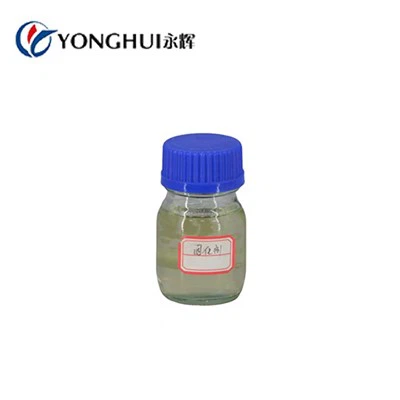


Hey there! As a supplier of H12MDA, I often get asked about the quality standards for this chemical. So, I thought I'd take a few minutes to break it down for you in this blog post.
First off, let's have a quick look at what H12MDA is. H12MDA, also known as 4,4-diaminodicyclohexylmethane or 4,4′-Methylendicyclohexanamine, is a special chemical with a wide range of applications. You can check out more details about it on our H12MDA page. It's commonly used in areas like the production of high - performance coatings, adhesives, and some types of plastics. Because of its diverse uses, maintaining high - quality standards is crucial.
Purity
One of the most important quality standards for H12MDA is its purity. High - purity H12MDA ensures that the end - products perform as expected. Impurities can have a negative impact on the chemical reactions that H12MDA participates in and the properties of the final products.
We usually measure the purity of H12MDA through gas chromatography. This method allows us to accurately quantify the amount of H12MDA in the sample and identify any impurities present. For most industrial applications, a purity level of at least 99% is required. In some high - end applications, such as aerospace coatings, a purity of 99.5% or even higher might be necessary.
Imagine you're making a high - performance adhesive. If the H12MDA you use has low purity, the adhesive might not bond as strongly, or it could have a shorter shelf - life. This is why we always strive to provide H12MDA with the highest possible purity.
Color and Appearance
The color and appearance of H12MDA can also tell us a lot about its quality. In its pure form, H12MDA should be a clear, colorless to slightly yellowish liquid. Any significant deviation from this can indicate the presence of impurities or degradation.
We use a color scale, like the APHA (American Public Health Association) scale, to measure the color of H12MDA. A lower APHA value means a lighter color, indicating a higher - quality product. For our H12MDA, we aim for an APHA value of less than 20.
If the H12MDA has a dark color, it could be a sign that the chemical has been exposed to heat, light, or air for too long, causing it to degrade. This type of degraded H12MDA may not work as well in your applications, so color is definitely something you need to keep an eye on.
Amine Value
The amine value is another key quality parameter for H12MDA. The amine value represents the amount of active amine groups in the H12MDA sample. It's measured in milligrams of potassium hydroxide (KOH) equivalent per gram of sample.
A consistent amine value is important because it affects how H12MDA reacts with other chemicals. For example, in the production of polyurethanes, the amine value of H12MDA determines the cross - linking density of the polyurethane network. If the amine value is too high or too low, the resulting polyurethane may have poor mechanical properties, such as low strength or flexibility.
We usually control the amine value within a very narrow range. For our standard H12MDA product, the amine value is typically maintained between 480 - 500 mg KOH/g.
Moisture Content
Moisture can be a real enemy when it comes to H12MDA. Even a small amount of moisture can cause problems during chemical reactions. Moisture in H12MDA can react with isocyanates (a common reactant in many applications), leading to the formation of carbon dioxide gas. This can cause foaming in the final product and affect its quality.
We use Karl Fischer titration to measure the moisture content of H12MDA. For our product, we keep the moisture content below 0.1%. By minimizing the moisture content, we ensure that our H12MDA performs well in your processes and helps you avoid any issues related to moisture.
Distillation Range
The distillation range of H12MDA is also an important quality indicator. A narrow distillation range means that the H12MDA is a relatively pure substance with consistent boiling points.
We perform distillation tests to determine the distillation range of our H12MDA. For our product, the distillation range is usually between 250 - 260°C at normal atmospheric pressure. This narrow range indicates that our H12MDA has a high degree of purity and uniformity.
Why Our H12MDA Meets the Standards
At our company, we have a strict quality control system in place to ensure that our H12MDA meets all these quality standards. We start with high - quality raw materials and use advanced manufacturing processes to produce H12MDA.
Our production facilities are equipped with state - of - the - art analytical instruments, such as gas chromatographs and Karl Fischer titrators, to monitor the quality of the product at every stage of the production process. We also conduct regular audits and inspections to ensure that our quality control procedures are being followed correctly.
In addition, we have a team of experienced chemists and technicians who are dedicated to maintaining and improving the quality of our H12MDA. They are constantly working on research and development projects to find new ways to enhance the performance and purity of our product.


Conclusion and Call to Action
So, as you can see, there are several key quality standards for H12MDA, including purity, color, amine value, moisture content, and distillation range. By choosing our H12MDA, you can be confident that you're getting a high - quality product that meets all these standards.
If you're in the market for H12MDA for your production needs, I encourage you to contact us for a consultation. We can discuss your specific requirements and how our H12MDA can fit into your processes. Whether you're making high - performance coatings, adhesives, or plastics, we're here to help you get the best results.
References
- Chemical Analysis Handbook for Special Chemicals
- Industrial Applications of H12MDA Research Report