

Hey there! As a supplier of 4,4 - Methylenebiscyclohexylamine, I'm super stoked to dive into the reaction mechanisms of this pretty cool chemical. So, let's get right into it!
Basic Introduction
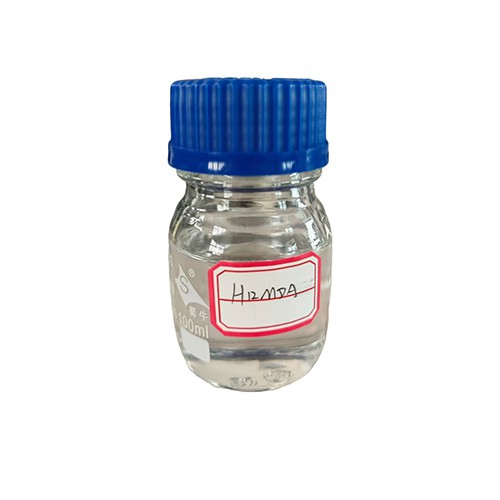
First off, 4,4 - Methylenebiscyclohexylamine, also known as 4,4-diaminodicyclohexylmethane or H12MDA, is a key compound in the world of special chemicals. It's a colorless to slightly yellowish liquid or solid, depending on the temperature, and it's got some really interesting chemical properties that make it useful in a bunch of different applications.
Reaction with Epoxides
One of the most common reactions of 4,4 - Methylenebiscyclohexylamine is with epoxides. Epoxides are these three - membered ring compounds with an oxygen atom and two carbon atoms. When 4,4-Methylenebiscyclohexylamine reacts with an epoxide, it's a type of nucleophilic ring - opening reaction.
The amino groups in 4,4 - Methylenebiscyclohexylamine are nucleophilic. That means they've got a pair of electrons that they're eager to share with something that's electron - deficient. Epoxides are electron - deficient at the carbon atoms in the ring because of the electronegative oxygen atom.
Here's how it goes down. The nitrogen atom in the amino group of 4,4 - Methylenebiscyclohexylamine attacks one of the carbon atoms in the epoxide ring. This breaks the relatively weak bond in the epoxide ring, and the oxygen atom in the epoxide gets a negative charge. Then, a proton transfer occurs. The negatively charged oxygen atom grabs a proton from a nearby source, like another molecule of 4,4 - Methylenebiscyclohexylamine or a solvent molecule.
This reaction is super important in the production of epoxy resins. Epoxy resins are used in coatings, adhesives, and composites. When 4,4 - Methylenebiscyclohexylamine is used as a curing agent for epoxy resins, it forms cross - links between the epoxy chains. This makes the resin harder, more durable, and resistant to chemicals and heat.
Reaction with Isocyanates
Another significant reaction is with isocyanates. Isocyanates have the functional group - N = C = O. When 4,4 - Methylenebiscyclohexylamine reacts with an isocyanate, it forms a urea linkage.
The reaction starts with the nucleophilic attack of the amino group in 4,4 - Methylenebiscyclohexylamine on the carbon atom of the isocyanate group. The carbon - nitrogen double bond in the isocyanate group breaks, and a new bond forms between the nitrogen of the amino group and the carbon of the isocyanate.
This reaction is widely used in the production of polyurethanes. Polyurethanes are used in foams, elastomers, and coatings. The reaction between 4,4 - Methylenebiscyclohexylamine and isocyanates can be controlled to get different types of polyurethanes with different properties. For example, by adjusting the ratio of the two reactants and the reaction conditions, you can make a soft, flexible foam or a hard, rigid plastic.
Acid - Base Reactions
4,4 - Methylenebiscyclohexylamine is a base because of the presence of the amino groups. When it reacts with an acid, it forms a salt. For example, if it reacts with hydrochloric acid (HCl), the nitrogen atom in the amino group accepts a proton from the acid.
The reaction can be written as:
$C_{13}H_{26}N_{2}+ 2HCl\rightarrow C_{13}H_{28}N_{2}Cl_{2}$
This acid - base reaction is useful in some purification processes. By forming a salt, the solubility of 4,4 - Methylenebiscyclohexylamine in different solvents can be changed, which can help in separating it from impurities.
Oxidation Reactions
4,4 - Methylenebiscyclohexylamine can also undergo oxidation reactions. Oxidation usually involves the loss of electrons or an increase in the oxidation state of an atom. In the case of 4,4 - Methylenebiscyclohexylamine, the amino groups can be oxidized.

Strong oxidizing agents like potassium permanganate ($KMnO_{4}$) or hydrogen peroxide ($H_{2}O_{2}$) can be used. The oxidation of the amino groups can lead to the formation of different products, such as nitro groups or other oxidized nitrogen - containing functional groups. However, these reactions are often complex and can produce a mixture of products.
Applications Based on Reaction Mechanisms
The reaction mechanisms we've talked about are the reason why 4,4 - Methylenebiscyclohexylamine is so useful. In the epoxy resin industry, the reaction with epoxides gives us strong and durable coatings for things like floors, ships, and industrial equipment. The coatings are resistant to corrosion, abrasion, and chemicals, which is really important in harsh environments.
In the polyurethane industry, the reaction with isocyanates allows us to make products with a wide range of properties. Soft polyurethane foams are used in furniture and bedding, while rigid foams are used in insulation. Elastomers made from these reactions are used in automotive parts and sports equipment.
Quality and Supply
As a supplier of 4,4 - Methylenebiscyclohexylamine, I understand the importance of providing a high - quality product. We make sure that our 4,4 - Methylenebiscyclohexylamine meets the strictest industry standards. We have a team of experts who monitor the production process from start to finish to ensure purity and consistency.
If you're in the business of making epoxy resins, polyurethanes, or any other products that use 4,4 - Methylenebiscyclohexylamine, I'd love to have a chat with you. Whether you need a small sample to test out or a large - scale supply for your production line, we've got you covered.
Conclusion
So, there you have it! The reaction mechanisms of 4,4 - Methylenebiscyclohexylamine are diverse and fascinating. From reacting with epoxides and isocyanates to acid - base reactions and oxidation, this compound plays a crucial role in many industries. If you're interested in learning more about our 4,4 - Methylenebiscyclohexylamine or want to discuss a potential purchase, don't hesitate to reach out. Let's start a conversation and see how we can work together to meet your chemical needs.
References
- "Advanced Organic Chemistry" by Jerry March
- "Polymer Chemistry" by Paul C. Hiemenz and Timothy P. Lodge
- Industry reports on epoxy resins and polyurethanes production