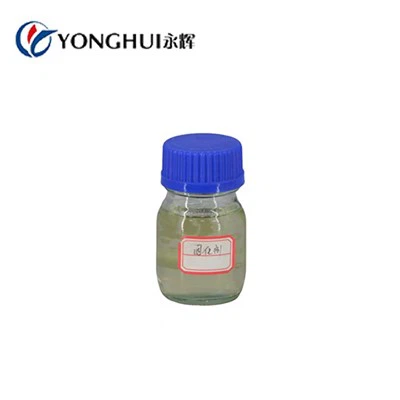


Hey there! I'm a supplier of Z - 133 Expoxy Resin Curing Agent, and today I wanna chat about one of the most frequently asked questions: What is the curing speed of Z - 133 Expoxy Resin Curing Agent at room temperature?
First off, let's get a bit technical. Epoxy resin curing agents are crucial in the process of making epoxy resins harden. The Z - 133 is a high - performance curing agent that we've developed with a lot of R & D work. When it comes to room temperature, which we usually consider to be around 20 - 25 degrees Celsius (68 - 77 degrees Fahrenheit), the curing speed of Z - 133 is pretty interesting.
The curing process of epoxy resin with a curing agent like Z - 133 is a chemical reaction. It's mainly about the cross - linking of the epoxy molecules with the curing agent molecules. In the case of Z - 133, it starts to react with the epoxy resin as soon as they're mixed. At room temperature, you'll start to notice some initial signs of curing within the first 30 minutes to an hour.
The initial curing is when the mixture starts to thicken up. You can think of it like when you make Jell - O. At first, it's all liquid, but then it slowly starts to get thicker. With Z - 133 and epoxy resin, the viscosity of the mixture will increase, and it'll become less runny. This is a good sign that the chemical reaction is taking place.
After the initial thickening, the next stage is the gel stage. This usually happens within 1 - 2 hours at room temperature. At this point, the mixture is still soft, but it's no longer a liquid. It has a jelly - like consistency. You can touch it gently without leaving a big mark, but it's not fully cured yet.
Now, the full curing process takes a bit longer. For Z - 133 at room temperature, it can take anywhere from 24 to 72 hours for the epoxy resin to reach its maximum hardness and strength. That's right, it's not an instant process. But the good thing is that during this time, you don't need to apply any external heat or special conditions. Just let it sit at room temperature, and it'll do its thing.
There are a few factors that can affect the curing speed of Z - 133 at room temperature. One of the main factors is the ratio of the curing agent to the epoxy resin. It's super important to follow the recommended ratio. If you use too much or too little of the Z - 133, it can either slow down or speed up the curing process in an unpredictable way.
Another factor is the humidity in the air. High humidity can sometimes slow down the curing process. That's because water in the air can interfere with the chemical reaction between the Z - 133 and the epoxy resin. So, if you're working in a very humid environment, you might notice that the curing takes a bit longer.
Now, let's talk about how Z - 133 compares to some other curing agents. There are many types of curing agents out there, like 4,4 - Methylenedianiline, 4,4′ - Methylenedi - Aniline, and 4,4 - Diaminodiphenylmethane. These are well - known curing agents, but they have different properties.
Some of these traditional curing agents might have a faster initial curing speed, but they also have some drawbacks. For example, they can be more toxic and have a shorter pot life. The pot life is the time you have to work with the mixture before it becomes too thick to use. With Z - 133, we've designed it to have a good balance between curing speed, safety, and pot life.
At room temperature, Z - 133 gives you enough time to work with the epoxy resin mixture, which is great for DIY projects or industrial applications where you need to apply the resin in a certain way. You can pour it, spread it, or mold it during the initial hours without having to rush.
In industrial applications, the curing speed of Z - 133 at room temperature is also a big advantage. It means that manufacturers don't need to invest in expensive heating equipment to speed up the curing process. They can just mix the Z - 133 with the epoxy resin and let it cure naturally at room temperature, which saves a lot of energy and money.
For DIY enthusiasts, it's also really convenient. If you're making a small tabletop, a piece of jewelry, or a craft project with epoxy resin, you don't have to worry about setting up a special curing environment. Just mix the Z - 133 with the epoxy resin, pour it into your mold or onto your surface, and let it do its magic at room temperature.


In conclusion, the curing speed of Z - 133 Expoxy Resin Curing Agent at room temperature is a well - balanced process. It starts with initial thickening within 30 minutes to an hour, reaches the gel stage in 1 - 2 hours, and fully cures within 24 - 72 hours. It's affected by factors like the ratio of the curing agent to the epoxy resin and the humidity in the air.
Compared to some other curing agents like 4,4 - Methylenedianiline, 4,4′ - Methylenedi - Aniline, and 4,4 - Diaminodiphenylmethane, Z - 133 offers a great combination of safety, pot life, and curing speed.
If you're interested in using Z - 133 for your epoxy resin projects, whether it's for industrial or DIY use, I'd love to talk to you. Just reach out to me, and we can discuss your specific needs and how Z - 133 can work for you.
References:
- "Epoxy Resins: Chemistry and Technology" by Clayton A. May
- Industry research reports on epoxy resin curing agents