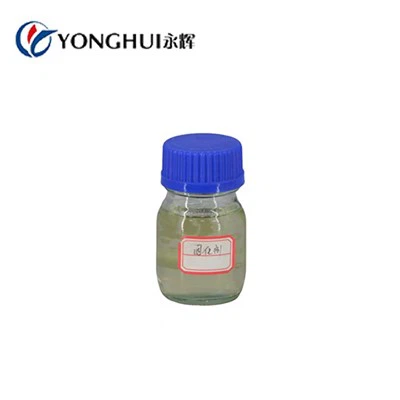


What is the viscosity of Z - 133 Expoxy Resin Curing Agent?
As a supplier of Z - 133 Expoxy Resin Curing Agent, I often encounter inquiries regarding its various properties, and one of the most frequently asked questions is about its viscosity. In this blog post, I will delve into the concept of viscosity, its significance for the Z - 133 curing agent, and how it impacts its applications.
Understanding Viscosity
Viscosity is a fundamental physical property that describes a fluid's resistance to flow. In simpler terms, it is a measure of how thick or thin a liquid is. A high - viscosity fluid, such as honey, flows slowly because its molecules have strong internal friction and resist movement relative to one another. On the other hand, a low - viscosity fluid, like water, flows easily as its molecules can move past each other with less resistance.
The viscosity of a substance is influenced by several factors, including temperature, pressure, and the chemical structure of the molecules. For the Z - 133 Expoxy Resin Curing Agent, temperature plays a crucial role. Generally, as the temperature increases, the viscosity of the curing agent decreases. This is because higher temperatures provide more energy to the molecules, allowing them to move more freely and reducing the internal friction between them.
Viscosity of Z - 133 Expoxy Resin Curing Agent
The Z - 133 Expoxy Resin Curing Agent has a specific viscosity range that is carefully calibrated to meet the requirements of different applications. At room temperature (around 25°C), the viscosity of Z - 133 typically falls within a moderate range. This moderate viscosity is beneficial as it allows for easy handling during the mixing process with epoxy resins.
When the Z - 133 curing agent is mixed with epoxy resin, the combined mixture's viscosity also needs to be considered. The proper viscosity of the mixture ensures good wetting of the substrate, which is essential for achieving strong adhesion. If the viscosity is too high, the mixture may not spread evenly over the surface, leading to poor bonding and potential voids in the cured product. Conversely, if the viscosity is too low, the mixture may run off the surface before it can cure properly.
Significance of Viscosity in Applications
The viscosity of the Z - 133 Expoxy Resin Curing Agent has a direct impact on its performance in various applications.


Coating Applications
In coating applications, the viscosity of the Z - 133 curing agent - epoxy resin mixture affects the appearance and quality of the coating. A well - balanced viscosity ensures a smooth and uniform coating finish. For example, in industrial floor coatings, a proper viscosity allows the coating to be applied evenly, providing a durable and aesthetically pleasing surface. If the viscosity is not optimized, the coating may have streaks, sags, or an uneven texture.
Adhesive Applications
In adhesive applications, the viscosity of the Z - 133 curing agent is crucial for achieving strong bonds. The curing agent needs to flow into the pores and irregularities of the surfaces to be bonded. A viscosity that is too high may prevent the adhesive from penetrating these areas, resulting in a weak bond. On the other hand, a very low - viscosity adhesive may not have enough body to hold the surfaces together during the curing process.
Composite Manufacturing
In composite manufacturing, where epoxy resins and curing agents are used to create high - strength materials, the viscosity of the Z - 133 curing agent affects the impregnation of the reinforcement fibers. The curing agent - resin mixture needs to flow through the fiber matrix to ensure complete wetting and proper distribution. A suitable viscosity allows for efficient impregnation, leading to composites with excellent mechanical properties.
Chemical Composition and Viscosity
The chemical composition of the Z - 133 Expoxy Resin Curing Agent also contributes to its viscosity. The Z - 133 contains 4,4 - Methylenedianiline (also known as MDA - 100(4,4 - Methylenedianiline) or DDM (Diaminodiphenylmethane)) as one of its key components. The molecular structure of these compounds influences the intermolecular forces within the curing agent.
The aromatic rings and amine groups in these molecules contribute to the cohesive forces between the molecules, which in turn affect the viscosity. The presence of these functional groups can lead to hydrogen bonding and other intermolecular interactions, increasing the internal friction and thus the viscosity of the curing agent.
Controlling Viscosity
As a supplier, we understand the importance of providing a Z - 133 Expoxy Resin Curing Agent with consistent viscosity. To achieve this, we have strict quality control measures in place during the manufacturing process. We carefully monitor and adjust the temperature and other process parameters to ensure that the viscosity of the curing agent remains within the specified range.
In addition, we also provide guidelines to our customers on how to handle and store the Z - 133 curing agent to maintain its viscosity. For example, we recommend storing the curing agent in a cool, dry place to prevent any unwanted changes in viscosity due to temperature fluctuations.
Conclusion
The viscosity of the Z - 133 Expoxy Resin Curing Agent is a critical property that significantly impacts its performance in various applications. A well - calibrated viscosity ensures easy handling, good wetting, and strong bonding. Our company, as a reliable supplier, is committed to providing high - quality Z - 133 curing agent with consistent viscosity.
If you are interested in learning more about the Z - 133 Expoxy Resin Curing Agent or have any specific requirements for your applications, we encourage you to contact us for a detailed discussion. We are ready to assist you in finding the best solutions for your projects.
References
- "Handbook of Epoxy Resins" by Henry Lee and Kris Neville.
- "Epoxy Resins: Chemistry and Technology" edited by Clayton A. May.
- Technical literature on epoxy resin curing agents from industry - leading manufacturers.